
Legally Binding Signatures
Integrated Into Your Escrow Flow
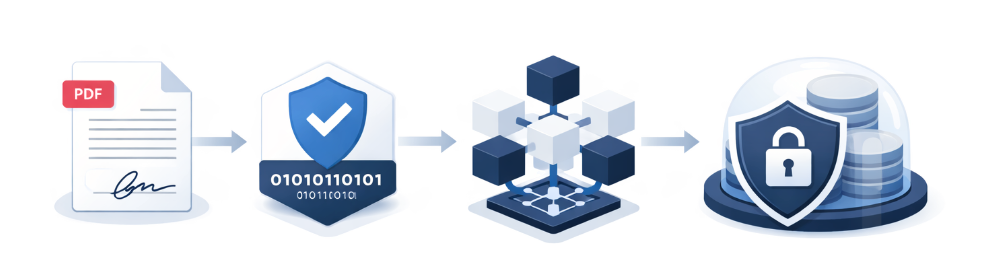
SecureSign Escrow integrates digital signing directly into the transaction lifecycle.
Agreements are signed, verified, and cryptographically linked to wallet-based escrow execution.
All in one continuous flow.

No detached documents. No manual reconciliation. Just a verifiable connection between what was signed and how funds are controlled.

Why We Use a Dedicated Signing Partner

Escrow only works if the underlying agreement can stand up to scrutiny.

That requires more than a basic "click-to-sign" experience. It requires signatures that are:

  • legally recognised across major jurisdictions,
  • reliably attributable to the signer,
  • and supported by a complete, auditable record.

Rather than building a lightweight in-house solution, SecureSign Escrow integrates with a dedicated signing provider.

This gives you enterprise-grade signing, while we focus on what matters most: escrow logic and smart-contract execution.
What Makes Escrow Signing Different

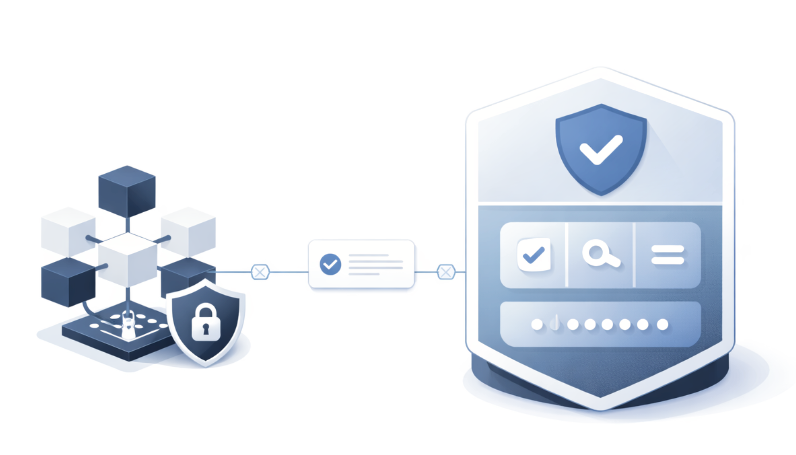
Signing an escrow agreement is fundamentally different from signing a standalone document.

Our signing integration is designed specifically for contract-controlled funds:

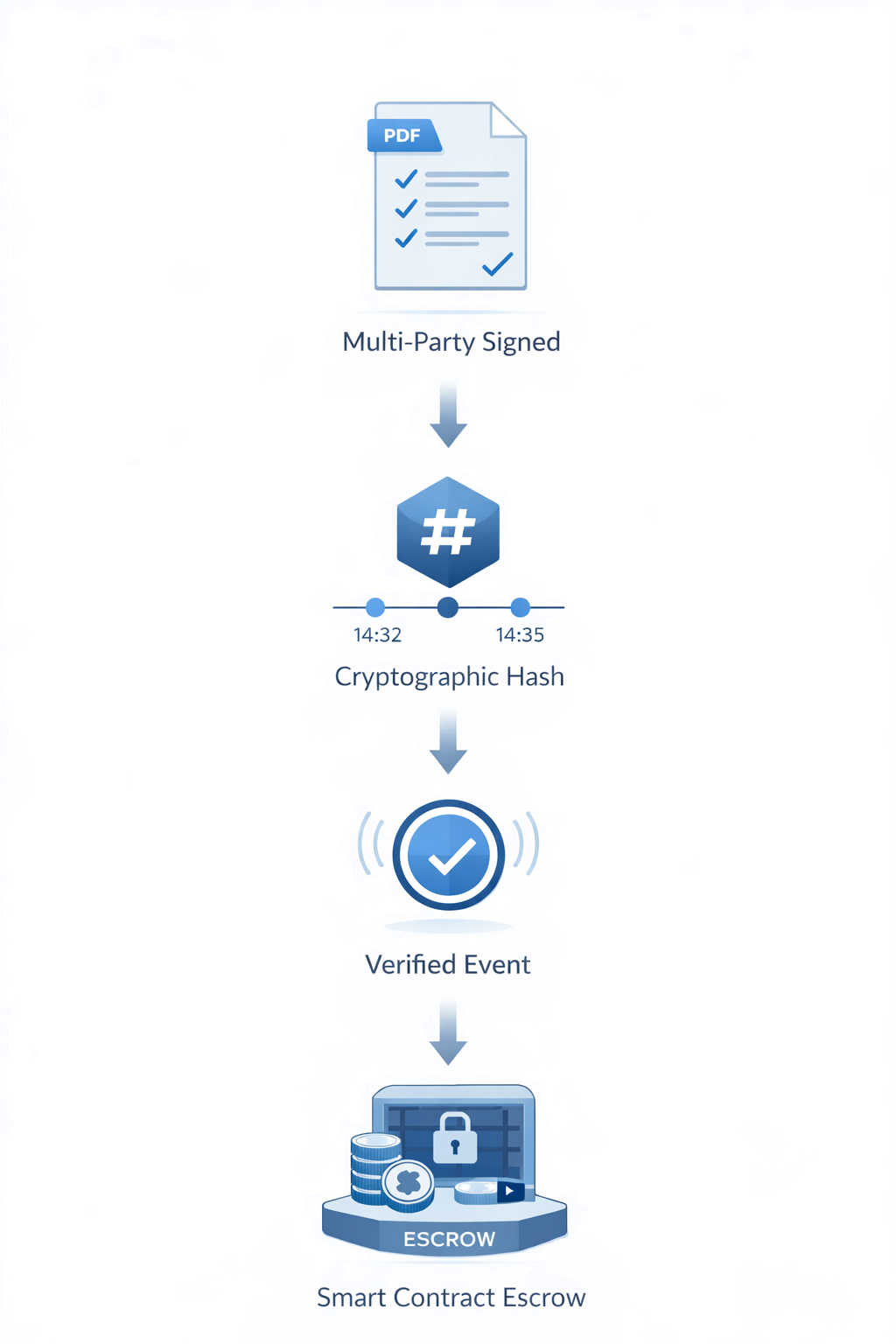
  • Contract hash linkage: Every final signed PDF is hashed (SHA-256) and linked to the escrow smart contract that controls the funds.
  • Verified completion events: The signing partner notifies the platform when all required signatures are completed, enabling escrow execution to proceed.
  • Multi-party signing flows: Support for two or more signers, in parallel or sequential order.
  • Identity & audit trail: IP addresses, timestamps, signer metadata, and a complete signing history are captured as part of the transaction record.
  • Long-term valid documents: PDF/A output suitable for audits, compliance checks, and long-term record keeping.

This ensures the signed agreement and the escrowed funds are cryptographically and operationally aligned.
Signing Provider: BoldSign

SecureSign Escrow currently integrates with BoldSign, a reliable and cost-effective e-signature provider well suited for escrow-based transactions.

Why Boldsign?
  • Legally binding digital signatures

  • Two-party and multi-party workflows

  • Webhook-based completion events

  • Cryptographic hash verification of signed documents

This integration allows us to offer robust signing without adding unnecessary complexity to the escrow flow.
Security & Compliance by Design

Our signing integration is built for high-trust transactions:

  • Tamper-evident PDFs with embedded signatures and audit trail.

  • Time-stamped events for every signer action.

  • Clear separation of duties between signing, escrow logic and fund custody.

  • End-to-end verification from signed contract to smart-contract-controlled funds.

In practice, this means funds cannot move without the correct agreement behind them.

Ready to Combine Signing and Escrow?

Launch your next deal with digital signing, crypto escrow and smart-contract enforcement in one unified flow.

Signing – Frequently Asked Questions

Yes. The integrated signing solution supports legally binding electronic signatures aligned with major frameworks such as eIDAS, ESIGN, and UETA. The signed PDF includes an audit trail showing who signed, when, and from which environment.

After signing is completed, the final document is hashed (SHA-256). This hash is stored and referenced by the escrow logic, creating a verifiable link between the agreement and the funds.

No. Signers receive a secure signing link, but the entire flow remains connected to SecureSign Escrow.

Documents are stored securely and remain accessible as part of the transaction record, together with their audit trail.
Yes. Both parallel and sequential signing flows are supported.

If required signatures are not completed, the escrow is not activated and funds are not locked.

Custom or alternative signing integrations may be possible for enterprise or white-label deployments.

Yes. Signing can be combined with optional identity verification when additional counterparty confidence is required.

If a dispute occurs, fund movement follows the predefined arbitration path configured as part of the deal.

The architecture supports auditability and traceability, but suitability depends on jurisdiction, contract content, and regulatory requirements.

Create a deal, upload your agreement, and follow the signing steps as part of the escrow flow.